
 By Theresa Mabry Encompass Director of Operations Couples need to have the Freedom to have fun! Who would you rather hang out with someone who laughs easily or someone who spends more time complaining? A person who turns any situation into an adventure, or a person who leaves no room in their routine for spontaneity? A partner who plans fun for the two of you, or a partner who sees everything on the calendar as an obligation?
The choice should be easy - most of us prefer to spend time having fun! And who better to have fun with than the person you’ve chosen to spend your life with? Research shows that couples who have fun together and laugh together have healthier, more vitalized relationships. That sounds like a pretty good reason to give yourself the freedom to have fun as a couple!
0 Comments
 By: Cindee Johnson Relationship Champion and Encompass Partner free·dom
/ˈfrēdəm/ noun: freedom Is that how you define freedom? Freedom can mean something different to each of us. It can mean being able to vote for specific ideals or for people who best represent your views. Freedom can mean the ability to voice your opinion freely. It may mean the opportunity to travel where you want, read what you want, look how you want. Maybe, for you, freedom is no financial debt. Or being free from all oppression. What does freedom mean to you?  By Kermit Rowe
Encompass Relationship Facilitator This month’s blog theme is “more than words.” So let’s take those three words and put them at the end of the following sentence to “explore the more” of a time-tested relational truth: Communication is more than words. How do we communicate besides talking? Well, we should know because we certainly do it a lot. A Psychology Today article famously reported that only seven percent of our communication happens through words. That means 93 percent of your intended message is left up to tone and non-verbal cues. Other estimated percentages may vary a bit, but one thing is clear: When it comes to communicating in relationships, it’s more than words can say.  By: Cindee Johnson
Relationship Coach The world paints for us vivid descriptions of love, especially during the month of February. From television ads urging us to buy our way into someone’s heart to social media posts making everyone an expert. Emotions run rampant. Feelings are full. Advice is plentiful. Wisdom is not. Yet, there are some other love insights I believe worth sharing—from elementary school children.  By Ronda Nissley
Encompass Co Director Well not really…. But the problem I have with Valentine’s Day is the emphasis on singling out one day a year to celebrate an inferior type of love with gifts, flowers, candy and goofy cards – things that have little to do with Real Love. (Unless your love language is gifts.) In last week’s blog, Lavern highlighted three characteristics of real love as a way to recognize counterfeit love. Real, true love is unconditional, others-centered, patient and kind. In contrast, counterfeit love looks quite different... 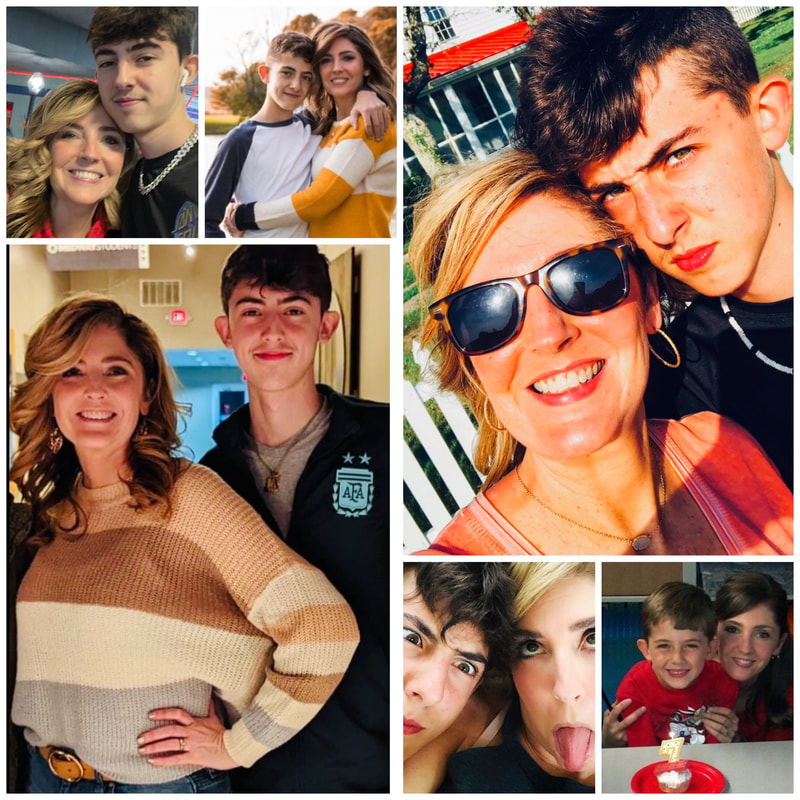 By: Hollie Kowalski
Encompass Outreach Coordinator Oh, how I love this boy. My son Dominik has his mother’s…well, everything. He is the most like me out of my four kids. The poor kid got my need for control, independence, my stubbornness, sensitivity, and poor math skills. But he also got my big heart, my passionate, charismatic personality, my drive, determination, and eyes that tend to see the best in people. The two of us stick together like glue…until we don’t. Due to our passionate and sensitive nature, if we don’t agree on an issue, our home becomes a battleground and unfortunately the innocent bystanders, known as our family, get drawn into battle as well. 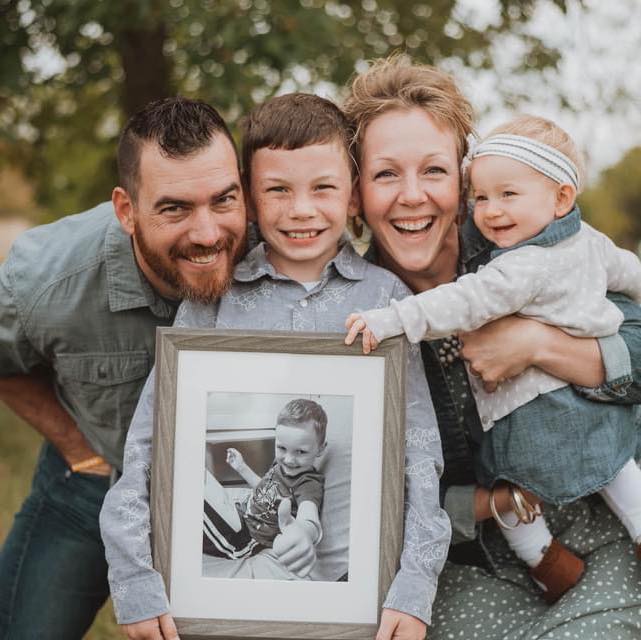 The September theme for our social media and blog posts is devotion/faith. Gina Craun and her family experienced the ultimate loss, but through it all maintained their faith and devotion to each other and to God. See where it's brought them in the following blog post by Gina.
This was my 3 year old daughter's bold and unquestioning response when I asked her what she learned in her class while I was in service one Sunday. I laughed and asked her what she meant and, without even looking up from the sucker she was trying desperately to unwrap, she informed me, “They said that Jesus lives in my heart… so I think right now He’s cookin’ in there.” And you know what… I can’t disagree. When our oldest son, Cainan, was 2 years old he was playing on the floor with his cars and seemed a bit sluggish. When I felt his body burning up again, with yet another fever that month, we took him to our family doctor to get some antibiotics. Little did we know that within 24 hours we would be packing overnight bags and be admitted to the closest children’s hospital. Within hours, our world was turned upside down and the word “leukemia” entered our daily vocabulary. Because of the strength his specific type of leukemia possessed, chemo alone was not going to be enough. We began prepping for a bone marrow transplant. A transplant that our oldest son at 2 would be receiving and our youngest son, at 11 months old, would be donating bone marrow for. During this time I began an online journal. It was my goal to find God’s plan and purpose in each day and each step of our journey and share that hope and light with others. I found such encouragement in this because… you see what you look for. And I wanted to see what God was cooking up for our family through this.  The most common answer given to us, to the question "What are you struggling with as a couple?" is COMMUNICATION. This month our posts will feature tips, insights, and research related to improving communication.
By Lavern Nissley Encompass Executive Director The topic of communication is pretty broad, so we'll narrow the scope to the 2 basic elements of interpersonal asserting and listening. BOTH are needed in order for communication to be productive. ASSERTING is expressing your wishes and interests in a positive way - not being aggressive or demanding. It is the opposite of being silent, of pretending to agree, of passive aggression. LISTENING is hearing to understand what the other person is saying - not interrupting or planning your own response. There are six animal types that represent common human responses to stress and that interfere with productive communication. Want to know your type(s)?  By: Joe Kowalski
Owner/CEO Empowered Community Services Most everyone can remember the panic, sudden jolt, and jarring pain of hitting the ground after their friend jumped off the teeter totter when we were kids. Or that time when you were in a hurry to get home with the groceries. You’re late, it’s raining, and instead of making three trips into the house with the groceries in the rain, you try to carry all 37 bags at one time, only to slip on the pavement sending a week’s worth of groceries all over the garage floor. What about this one? You are up against a deadline at work, going on 4 hours of sleep and you get a call at 5:30p from your spouse demanding “where are you?” With everything going on, you forgot to update your calendar with the kids’ recital that you are now going to miss. These lessons on gravity, imbalance, and regret are hard to forget. Unbalanced objects, whether they be playground equipment, people, or the expectations of others, will always fall. My wife and I have four children (3 high schoolers still at home,) a new grandson, 3 dogs, and I run my own small business. The demands on my time are many and balance becomes more and more difficult to maintain. By my own admission, I have a lot of work to do when it comes to balance in my life, but the following are a few pieces of advice I’ve come to cherish on this exceedingly difficult subject.  By Kermit Rowe
Encompass Relationship Facilitator If you are looking for objective, empirical evidence that physical fitness leads to marital happiness and endurance, you’ll be looking long and hard. There just isn’t much out there. But observation and personal experience offer plenty of evidence that it does. Focus On The Family, one of the preeminent marriage ministries of the 20th and 21st centuries, offers this in a recent article: “Exercise isn’t the answer to every marriage issue, but it will help you to bond on a new level and establish invaluable disciplines, such as perseverance and goal-setting, that can help combat marital fatigue.” |

HostsDr. David Marine and Theresa Mabry are Co-Directors of Encompass since June 1, 2024. TOPICS
All
Archives
July 2024
|

FIND IT QUICKLY |
STAY CONNECTEDOFFICE HOURSMON 9a-2p
TUE 9a-2p WED 9a-2p THU 9a-2p Other hours by appointment VISIT US616 N. Limestone St. | Springfield, OH
|
Funding is provided by Clark County Job and Family Services, Charles L. Shor Foundation, Nehemiah Foundation, Springfield Foundation, Turner Foundation, and private donations and fees.
Program content is the sole responsibility of Encompass Connection Center and does not necessarily represent the views of the funders.
Encompass Connection Center services are provided to all eligible persons on a non-discriminatory basis. Encompass Connection Center complies with all applicable laws and regulations concerning discrimination does not discriminate on the basis of the potential participant's race, gender, gender orientation, age, disability or religion.
Registered 501(c)(3). EIN: 37-1485217
Program content is the sole responsibility of Encompass Connection Center and does not necessarily represent the views of the funders.
Encompass Connection Center services are provided to all eligible persons on a non-discriminatory basis. Encompass Connection Center complies with all applicable laws and regulations concerning discrimination does not discriminate on the basis of the potential participant's race, gender, gender orientation, age, disability or religion.
Registered 501(c)(3). EIN: 37-1485217