
Practical tips and insights for your relationships

Building a Shared Purpose, Not Just a Shared Schedule
Shared calendars can keep life organized, but they cannot give a marriage direction. Discover how couples can move beyond coordinating schedules to building a shared purpose, pursuing meaningful goals, and growing together.

Do You Know Who Your Spouse Is Becoming?
The person you married is still growing—and so are you. When familiarity turns into assumption, couples can stop asking questions and miss who their spouse is becoming. Discover how simple curiosity can create meaningful moments of connection and keep you growing together.

The Slow Build of Resentment in Marriage — and How to Interrupt It
Resentment in marriage rarely begins with one big moment. More often, it builds quietly through unspoken needs and repeated disappointments. Learn how to recognize the early signs of resentment and interrupt the pattern with honest, intentional conversations.

When Connection Gets Lost in the Routine
When life gets busy, couples can become great at managing schedules, responsibilities, and routines while quietly losing meaningful connection. Discover how four intentional practices—Push, Priorities, Purpose, and Passion—can help bring connection back into everyday marriage.

The Small Moments That Keep You Connected
Small moments of connection can have a lasting impact on a marriage. Learn how recognizing your spouse’s everyday bids for attention—and choosing to turn toward them—can help both partners feel noticed, valued, and connected.

When Silence Creates Distance in Marriage
Silence in marriage isn't always peaceful. When communication gives way to withdrawal, distance can quietly grow between partners. Understanding what’s behind the silence — and learning how to respond with intention — can help couples break unhealthy patterns and begin reconnecting.

Why Marriages Drift Apart (and How to Reconnect)
Most marriages don't drift apart because of one dramatic moment. More often, it's the quiet accumulation of overlooked conversations, missed opportunities to connect, and the everyday busyness of life. The encouraging news is that just as distance grows through small moments, connection can be rebuilt the same way—one intentional choice at a time.

The Real Benefits of Marriage
Marriage isn't always easy, but research continues to show that investing in a healthy relationship can lead to greater emotional well-being, stronger support, better financial stability, and lasting benefits for families and communities. Discover why a strong marriage is worth the effort.

What If Growth in Your Marriage Starts with You?
When conflict arises, it's easy to focus on what your spouse needs to change. But what if the greatest opportunity to strengthen your marriage begins with your own response? Discover five questions that can help shift your perspective, improve communication, and build deeper connection.
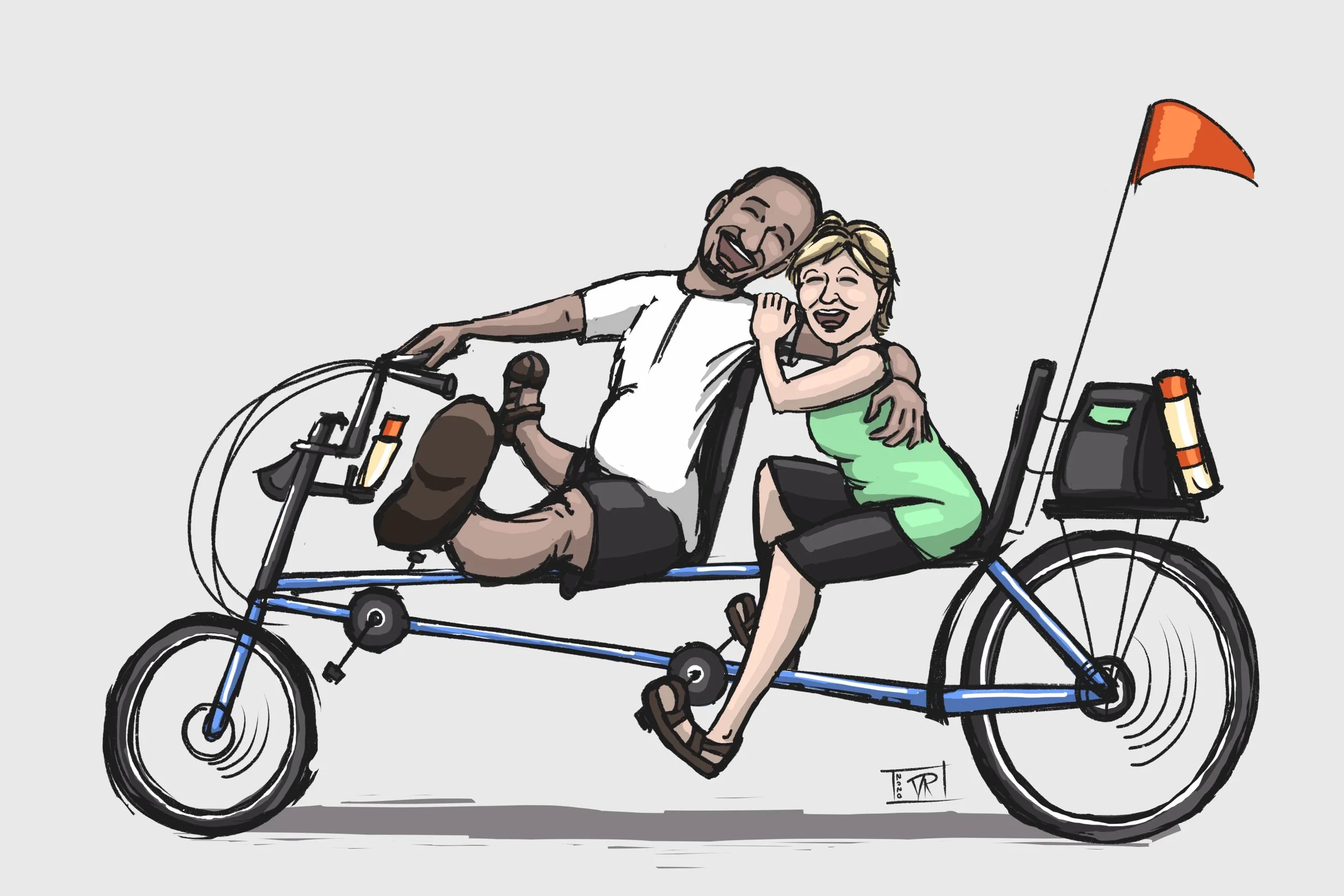
Marriage on Two Wheels: Tandem Bicycling and Lasting Love
What can 14,000 miles on a tandem bicycle teach you about marriage? More than we ever imagined. Over thirteen years of riding together, we discovered that communication, teamwork, shared goals, and learning to navigate life's hills are just as essential on a tandem bike as they are in a healthy relationship. Along the way, we experienced plenty of laughter, a few falls, and lessons that transformed both our cycling and our marriage.

Healthy Boundaries in Marriage: Staying Connected Without Losing Yourself
A few years ago, a woman asked a simple but loaded question: "How do I love my spouse, but still express my own voice and needs?"
It's a question we hear in different words almost every week. Couples come to us tired — not because they don't love each other, but because somewhere along the way they lost track of where one person ends and the other begins.
That's a boundaries problem. And it's worth talking about, because boundaries are one of the most misunderstood words in marriage.
Say "boundaries" out loud and a lot of people picture walls — distance, keeping someone out, building a case for separateness. In reality, healthy boundaries are what make closeness possible. They're not the opposite of connection. They're what keeps connection from collapsing into either control or distance.

Is Recreational Marijuana Quietly Affecting Your Marriage?
Recreational marijuana has become part of the daily landscape for millions of American couples. It is legal in most states. It is normalized in popular culture. And for many people, it feels like a harmless way to unwind at the end of a long day.
But in my work with couples at Encompass Connection Center, I keep hearing a version of the same story. One partner feels like the other isn't really there. Conversations that should be simple turn into arguments — or get avoided altogether. Something has shifted, and neither person can quite name what it is.
Sometimes, after we spend time together, the question quietly surfaces: could recreational marijuana be part of what's happening here?
If that question has crossed your mind — about your own use, your partner's use, or what the two of you have stopped talking about — this is worth reading.

How To Express Needs Without Sounding Critical
I have been guilty of being critical in my marriage. My words and tone come out wrong a lot of times and especially towards David. You may assume that because we work with marriages, we communicate perfectly, but we don’t. I must choose to work on myself and make sure I am conveying my needs well.
A need expressed as criticism often creates distance, but a need expressed with clarity and humility can become an invitation to deeper connection.

The Difference Between Reacting and Responding in Marriage
Reacting in marriage is fast, emotional, and often fueled by whatever your nervous system is doing in the moment. Responding is slower, intentional, and shaped by what you actually want for the relationship. One protects your ego; the other protects your connection.
As I look back over our own marriage of almost 48 years, I'm embarrassed to say that, even though we've been trained and experienced relationship facilitators for about 36 years, reacting has been more prolific than responding. But I'm encouraged to observe that we've gotten better at responding, and we want the same for all couples!

What Emotional Safety Looks Like in a Marriage
Most people do not pull away from their spouse because they want distance. Often, they pull away because coming closer no longer feels safe.
They may fear being criticized, dismissed, misunderstood, corrected too quickly, or met with defensiveness. Over time, even small moments can teach a person to protect themselves. They share less. They risk less. They stop bringing up what matters.
That is why emotional safety is so important in marriage.

Why Listening Matters: The Power of Talking Less in Relationships and Communication
That’s right. Just stop talking.
Not forever, of course. But perhaps long enough to let someone else speak. Long enough to learn something. Long enough to understand.
Most of us—unless we are naturally quiet—could probably benefit from saying a little less and listening a little more. In a world overflowing with opinions, commentary, interruptions, and constant noise, thoughtful listening has become surprisingly rare.

How to Repair a Conversation After It Goes Wrong
Communication is one of the greatest gifts in a relationship, but it is also one of the greatest places where couples can experience hurt, misunderstanding, and frustration. Even healthy couples occasionally say things poorly, become defensive, raise their voices, shut down emotionally, or leave a conversation feeling wounded and disconnected.
The goal in marriage is not perfection. The goal is learning how to repair.
Healthy couples learn how to repair, reconcile, and move toward one another again.

Avoid Amy and the emotional escalator with a timeout
Just blame it on Amy! That’s the pet name Encompass Connection Center relationship coaches use to refer to a region of the human brain called the amygdala when working with couples, parents, and co-workers. When you are looking for an explanation for why conversations escalate into hurtful, even destructive situations, you can point to Amy as one of the main culprits. Because left unchecked, Amy can be a bad girl!

Top 7 Communication Mistakes Couples Make in Marriage — and How to Fix Them
Ronda and I are approaching our 48th wedding anniversary at the end of 2026. While that hardly seems possible, what DOES reflect reality are the hundreds of communication mistakes we've made in almost five decades of marriage! You'll be seeing the top 7 as well as practical ways to turn each around.

Healthy Communication in Marriage: Practical Tools to Build Connection and Trust
Many married couples talk every day but still feel unknown. Healthy communication is more than exchanging information; it is the pathway to being heard, understood, safe, and connected. This practical guide helps couples strengthen communication by creating the right climate, practicing the right posture, using the right skills, replacing unhealthy patterns, and building daily rhythms of connection.