
Healthy Boundaries in Marriage: Staying Connected Without Losing Yourself
By Lavern Nissley
Encompass Facilitator
Healthy Boundaries in Marriage: Staying Connected Without Losing Yourself
A few years ago, a woman asked a simple but loaded question: "How do I love my spouse, but still express my own voice and needs?"
It's a question we hear in different words almost every week. Couples come to us tired — not because they don't love each other, but because somewhere along the way they lost track of where one person ends and the other begins.
That's a boundaries problem. And it's worth talking about, because boundaries are one of the most misunderstood words in marriage.
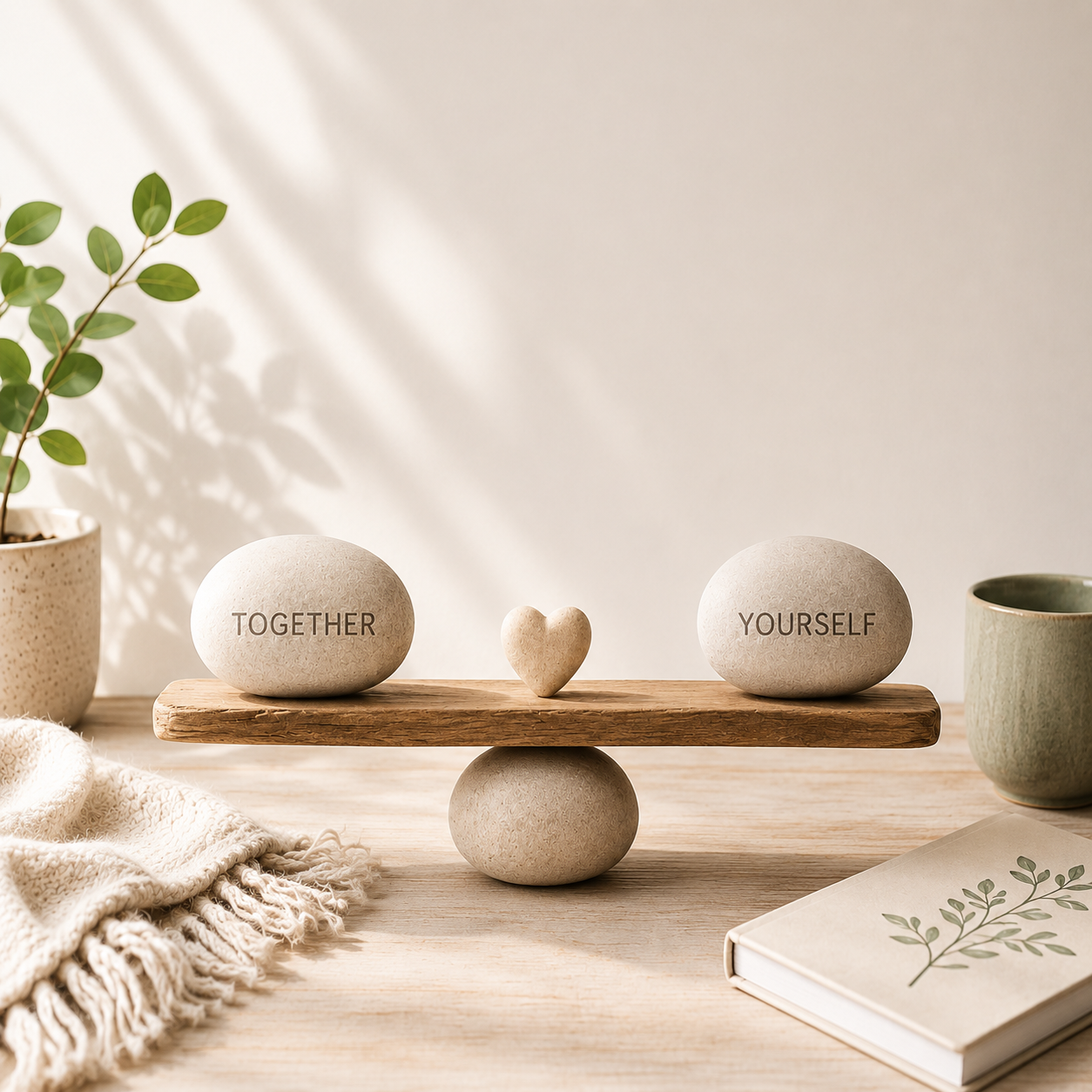
Say "boundaries" out loud and a lot of people picture walls — distance, keeping someone out, building a case for separateness. In reality, healthy boundaries are what make closeness possible. They're not the opposite of connection. They're what keeps connection from collapsing into either control or distance.
Two Ways Marriages Drift Off Course
Being Consumed
In some marriages, one spouse's preferences, moods, or needs quietly take over. The other spouse adapts, defers, and goes along — not because they were asked to disappear, but because it became the path of least resistance. If you're in this place, it might sound like:
My needs don't really matter here.
It's easier to just do it their way.
I don't have much of a say when decisions are made.
I'm not sure I know who I am outside of this relationship anymore.
It can look peaceful from the outside. Underneath, it's usually exhausting.
Being Too Distant
The opposite drift happens when two people stop functioning as a team. They're still married, still under the same roof, but increasingly living parallel lives. It might sound like:
I don't really know what's going on with them anymore.
We're more like roommates than partners.
I'm carrying this — emotionally, spiritually — on my own.
We talk, but not about anything that matters.
Independence isn't the problem. Too much of it, with no shared center, is.
What Healthy Looks Like Instead
Healthy boundaries don't sit at either extreme — they hold the middle. You stay a team and you stay yourself.
That might sound like:
We play to our strengths and genuinely enjoy doing things together.
We don't agree on everything, and that's okay — we work to understand each other instead of needing to win.
I want my spouse to grow into who God made them to be, and they want that for me too.
We show up for each other emotionally, without either of us carrying the full weight of the other's well-being alone.
That last one matters more than it might seem. Healthy boundaries say: I'm committed to you, and I'm also responsible for my own thoughts, feelings, and growth. That's not selfishness. That's what makes real love sustainable.
Boundaries Aren't Just One Thing
"Boundaries" can feel abstract until you break it into the actual areas of life where couples bump into each other. A few worth checking in on:
Time — How much of it you give to each other, your kids, work, and yourself, and whether that balance still feels fair.
Emotional — How much you're able to be present for your spouse without losing yourself in their moods or expecting them to manage yours.
Mental — You both feel free to hold your own opinions and values, even when they differ.
Conversational — What topics feel open between you, and what's gotten harder to bring up.
Physical — Comfort with closeness, space, and touch — for both of you.
Material —How you navigate money, lending, and generosity with mutual respect and shared decision-making.
Internal — How much energy you have left for yourself after giving to everyone else.
You probably won't land in the same spot in every category — and that's normal. Most couples are healthier in some areas than others.
A Few Questions Worth Sitting With
As you think about your own marriage:
Where do you feel consumed — like your voice gets lost? Where do you feel distant — like you're more housemates than partners? And where are you already experiencing that healthy middle — connected and still yourself?
Your answers might shift depending on the area of life you're looking at, and that's useful information, not a verdict.
The encouraging part is this: boundaries are a skill, not a personality trait. Like communication or conflict resolution, they can be learned and practiced — and every small adjustment tends to ripple into a stronger, more honest marriage.
Ready to Build a Stronger Marriage?
Healthy boundaries are one of the relationship skills we help couples develop in the RINGS Experience — practical education and coaching toward a healthier, more satisfying marriage.
Learn to communicate needs without guilt or conflict
Find the balance between connection and individuality
Build skills that last well beyond the program
→ Take the Free Relationship Assessment
→ Learn About the RINGS Experience
→ Schedule a Free Intake Conversation
The boundary categories in this post are adapted from the work of Dr. Alison Cook, a psychologist and author of Boundaries for Your Soul. You can find more of her writing and resources at dralisoncook.com.*
* This blog is a unified adaptation of content originally written by Lavern Nissley and published in four weekly entries in October 2020. We are grateful for his foundational insights and contribution to this material