Top 7 Communication Mistakes Couples Make in Marriage — and How to Fix Them

By Lavern Nissley
Encompass Facilitator
Ronda and I are approaching our 48th wedding anniversary at the end of 2026. While that hardly seems possible, what DOES reflect reality are the hundreds of communication mistakes we've made in almost five decades of marriage! You'll be seeing the top 7 as well as practical ways to turn each around. Even couples with deep love (Ronda and I DO love each other deeply) can drift into misunderstanding, resentment, or silence. Yet many communication problems aren’t signs of incompatibility; they’re common habits that can be unlearned. We hope you can learn from our mistakes!
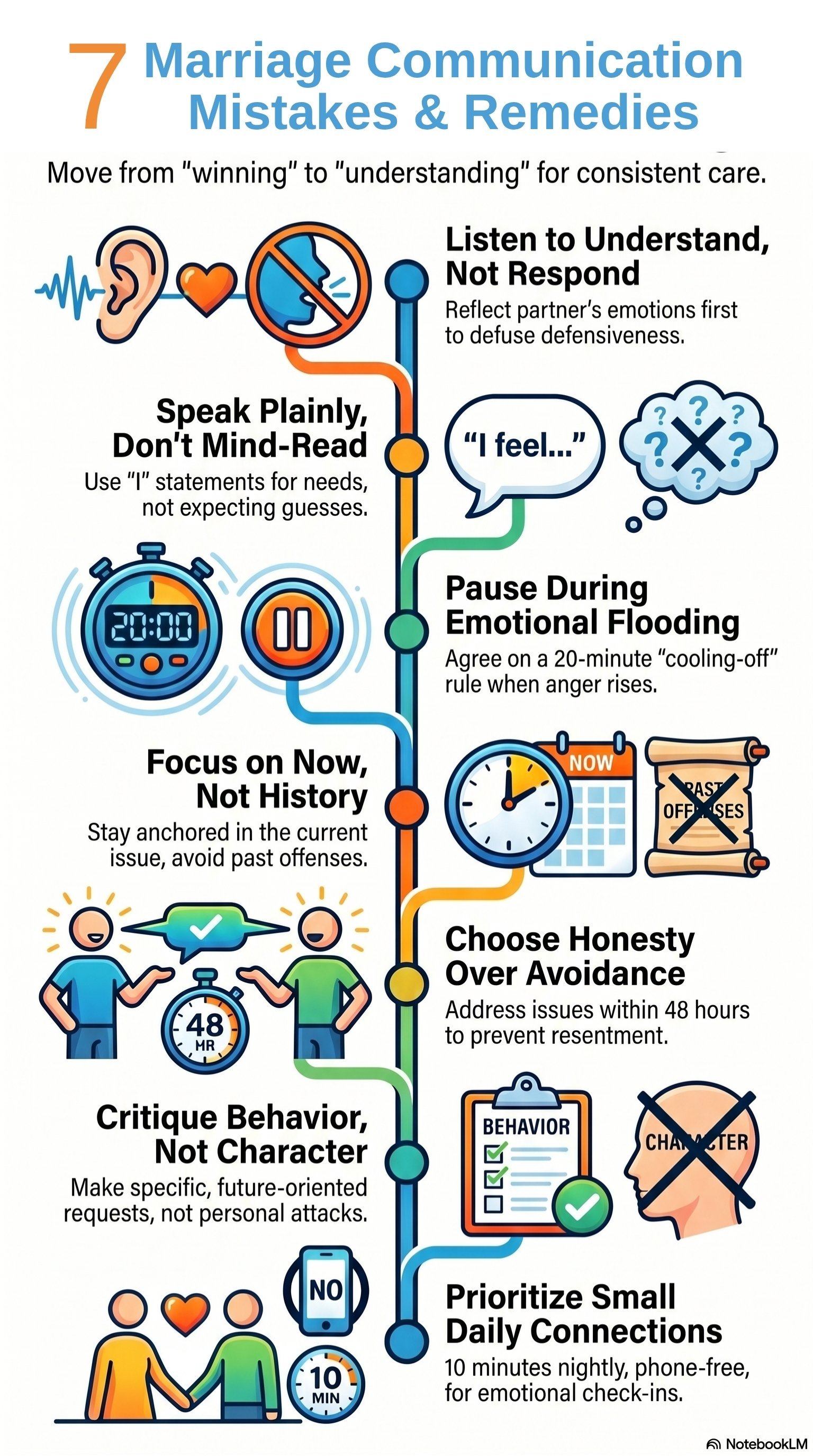
1. Listening to Respond, Not to Understand
Many spouses think they’re listening, but they’re really just waiting for their turn to talk or rebut. When one partner starts forming a counterargument mid-conversation, they miss what’s being said—and undermine trust.
Fix it: Practice active listening. When your partner speaks, focus entirely on their words and emotions. Reflect back what you hear—“So you’re frustrated that I didn’t call when I was running late”—before offering your own response. This small step signals empathy and often defuses defensiveness on both sides.
2. Assuming Your Partner “Should Just Know”
Expecting your spouse to read your mind leads straight to disappointment. Thinking “if they really loved me, they’d know” sets an impossible standard. Over time, this unspoken pressure breeds frustration and distance.
Fix it: Replace mind-reading with plain speaking. If you need something—emotional support, help with chores, physical affection—say it clearly and kindly. Try using I statements: “I feel unappreciated when the dishes pile up” is far more effective than “You never help around here.” Clarity invites cooperation; guessing invites conflict.
3. Letting Emotion Drive Every Conversation
Anger, hurt, or stress can flood a discussion before logic ever enters. When couples speak from raw emotion, words often become weapons—sarcasm, exaggeration, or accusations that can’t easily be taken back.
Fix it: Learn to pause before reacting. If you feel hot emotions rising, take a break: step outside, breathe deeply, or agree to resume the talk later when both of you can think calmly. Setting a “cooling-off” rule—such as waiting 20 minutes before restarting a heated argument—can protect your marriage from emotional spillover.
4. Bringing Up the Past During Today’s Conflict
A simple disagreement about scheduling can turn into a marathon over every past offense. When partners drag old wounds into current issues, the emotional load becomes too heavy to solve anything productively.
Fix it: Stay anchored in the present moment. Focus on resolving the specific issue at hand. If deeper patterns keep resurfacing (like broken promises or recurring behaviors), choose a separate time to discuss those calmly. A good phrase to use is, “Let’s focus on this issue right now, and we can revisit that other concern later.” It shows respect while keeping the conversation manageable.
5. Avoiding Hard Conversations Altogether
Some people prefer peace over honesty. They bury frustrations, thinking silence is kinder—or safer. Unfortunately, suppressed feelings don’t disappear; they ferment, eventually erupting as resentment or indifference.
Fix it: Choose gentle honesty over avoidance. If an issue bothers you for more than a day or two, it’s worth discussing. Use timing wisely—don’t corner your spouse when they’re tired or distracted. Remember the acronym "HALT" and avoid confronting when either of you is Hungry, Angry, Lonely, or Tired. Approach with empathy: “There’s something on my mind, and I’d like to talk about it because I care about us.” Addressing problems early prevents small cracks from becoming fractures.
6. Using Criticism Instead of Complaints
There’s a big difference between a complaint (“I wish you’d call when you’re running late”) and a criticism (“You’re so inconsiderate”). Criticism attacks character instead of behavior, instantly triggering defensiveness or shame.
Fix it: Keep feedback behavior-focused and future-oriented. Instead of labeling your partner, describe their action and its impact—and include what you need next time. For instance: “When you went out without telling me, I felt anxious. Can you text me next time?” This keeps communication collaborative instead of adversarial.
7. Neglecting Everyday Connection
Not all communication problems are loud or dramatic; some are quiet and slow. When couples stop sharing little things—day-to-day thoughts, jokes, or gratitude—their relationship’s “emotional bank account” runs dry. Then, when conflict arises, there’s less goodwill to draw on.
Fix it: Rebuild rituals of connection. Set aside 10 minutes each day to check in—with no phones, no agenda, just genuine curiosity. Ask questions like, “What was the best part of your day?” or “What’s something you’re looking forward to this week?” The RINGS Chat from The RINGS Experience, a couple's course offered by Encompass, is a great tool for building connection. Small talk isn’t shallow—it’s the soil where deeper intimacy grows.
Turning Communication Into Connection
No couple communicates perfectly all the time. The healthiest marriages aren’t free from conflict; they’re simply better at handling it respectfully and repairing afterward. When each partner feels heard, valued, and safe, trust deepens even through disagreements.
To build that trust:
• Lead with curiosity, not certainty. Assume good intent unless proven otherwise.
• Mind your tone and timing. How you say something often matters more than what you say.
• Repair quickly. A sincere apology or an affectionate gesture after conflict can restore connection faster than hours of cold silence.
• Celebrate progress. Every time you navigate a tough conversation more patiently or openly, acknowledge it together—it strengthens the habit.
Ultimately, communication in marriage isn’t about perfect phrasing; it’s about consistent care. When couples commit to understanding more than winning, they transform everyday talk into a language of love—one that keeps evolving, deepening, and sustaining them through every season of their life together.